Vehicle-on-plant incidents: what they are and how AI can reduce them by up to 61%
Updated: Apr 14
What counts as a vehicle-on-plant incident
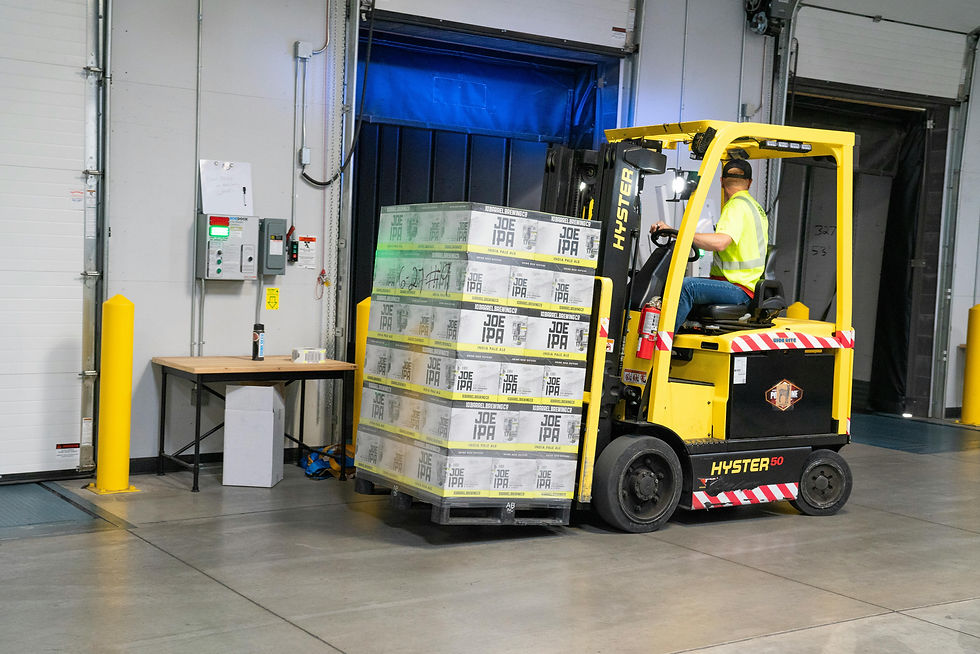
The term "plant" in a workplace safety context refers to machinery, equipment, appliances, vehicles, and tools used in the operation, including items as diverse as forklifts, conveyors, cranes, loaders, and powered trolleys. A vehicle-on-plant incident is any event where mobile plant interacts unsafely with a person, another piece of plant, or fixed infrastructure.
The most common types include a forklift or mobile vehicle striking a pedestrian (the number one cause of forklift fatalities), a vehicle colliding with racking, walls, dock edges, or other infrastructure, a person being crushed between a vehicle and a fixed object (accounting for 46% of forklift fatalities), a vehicle overturning due to speed, load imbalance, or surface conditions, and near misses where any of the above nearly occurred but didn't result in contact.
That last category, near misses, is the most important for prevention. For every vehicle-on-plant incident that causes injury, there are hundreds of near misses that went undetected.
Why vehicle-on-plant incidents persist
These incidents aren't caused by a lack of rules. Every facility with mobile plant has traffic management plans, speed limits, pedestrian walkways, operator training, and exclusion zones. The question is why incidents keep happening despite these controls.

The visibility gap
Vehicle-on-plant near misses happen fast, leave no trace, and are almost never reported. A forklift passes too close to a pedestrian at an intersection. A reach truck clips a rack upright during a tight turn. A tow tractor nearly strikes a worker who stepped into its path. Each event lasts one to three seconds and is forgotten within minutes.
Without continuous monitoring, safety teams see only the incidents that were serious enough to cause injury, damage, or a report. The underlying pattern of near misses, the leading indicators that predict where the next incident will occur, remains invisible.
The compliance gap
Traffic management plans, exclusion zones, and speed limits are only as effective as their enforcement. As we covered in our blog on forklift-pedestrian safety, complete separation of vehicles and pedestrians is rarely achievable in a working warehouse. Workers take shortcuts, walkways get blocked, and compliance erodes during busy periods when throughput pressure is highest.
The ILO recommends marking all traffic and pedestrian movements on a plan so you can see where pedestrians and vehicles interact, and then identifying improvements that will reduce the contact. But a plan on paper doesn't guarantee compliance on the floor.
The blind spot gap
Mobile plant, by its nature, has restricted visibility. HSE visibility assessments have found that an area over 10 metres in front of a loading shovel can be completely obscured from the driver's view. Forklifts carrying loads have significant blind spots forward and to the sides. These design limitations mean that even attentive, well-trained operators can miss pedestrians who are close to the vehicle.
How inviol reduces vehicle-on-plant incidents by 61%
inviol uses your existing CCTV cameras to continuously monitor for the vehicle-on-plant events that drive the most serious outcomes. The system focuses on the highest-risk zones in your facility: intersections, dock areas, exclusion zones, and anywhere that mobile plant and pedestrians or fixed infrastructure interact.

Capturing the near misses that predict incidents
The system detects pedestrian-vehicle near misses, exclusion zone breaches, speed violations, and unsafe vehicle movements across every shift, including overnight operations and peak periods. Every event is captured with a time-stamped video clip, regardless of whether anyone on the floor noticed it.
This is the foundation of the 61% reduction. By capturing the near misses that were previously invisible, inviol gives safety teams the leading indicators they need to intervene before someone gets hurt.
Turning patterns into targeted improvements
inviol's heatmap and reporting tools aggregate every detected event over time, revealing exactly where, when, and how vehicle-on-plant risk concentrates across your facility.
The patterns that emerge are specific and actionable. A particular intersection generates three times the near-miss rate of any other point on site. Speed violations spike during the final two hours of each shift. An exclusion zone near the dock is being breached consistently on the afternoon shift when a delivery window creates congestion.
Each pattern points to a specific intervention: reposition a barrier, adjust a schedule, redesign a traffic route, or brief a team on a specific risk zone. These targeted changes are far more effective than blanket reminders, because they address the systemic causes rather than just the symptoms.
From incidents to coaching
Every captured event becomes the starting point for a coaching conversation. Video clips with faces blurred for privacy are shared with the team: what happened, what could have gone wrong, and what should change.
This coaching-first approach is central to how the 61% reduction is sustained over time. Rather than a one-off training programme that fades, continuous monitoring and coaching creates a feedback loop where workers see real events, discuss them openly, and change their behaviour because they understand the risk. The improvements compound as the team develops safer habits and the most dangerous patterns are eliminated from the operation.

What 61% looks like in practice
A 61% reduction in machine-on-plant incidents means fewer workers struck by vehicles, fewer crush injuries, fewer near misses escalating into serious events, and fewer of the costly disruptions that follow every incident: investigations, downtime, insurance claims, and the loss of trust that affects morale and retention.
For context, inviol customers also typically see an average 67% reduction in overall risk and a 42% reduction in total incidents across their sites. The 61% figure specifically for machine-on-plant events reflects the technology's direct impact on the highest-consequence category of workplace safety.
Compliance and your obligations
Under New Zealand's HSWA, PCBUs have a duty to manage risks associated with plant so far as is reasonably practicable. In Australia, Safe Work Australia states that if you manage or control plant, you must manage risks to keep yourself and others safe, with specific duties covering the full lifecycle of plant including its operation. In NSW, SafeWork NSW identifies incidents involving vehicles and mobile plant as the leading cause of workplace fatalities in the state.
In the US, OSHA requires separation of pedestrians and forklifts where possible, marked aisles and passageways, and comprehensive operator training. In the UK, HSE reports that 25 workers were killed by moving vehicles in the workplace in 2023/24 and requires employers to carry out risk assessments for all workplace transport activities.
A continuous monitoring system that captures vehicle-on-plant events and documents the coaching and process improvements that follow provides strong evidence of meeting these duties in every jurisdiction.
Getting started
If vehicle-on-plant incidents are a concern in your operation, and in any facility with forklifts, mobile plant, and workers on foot, they should be, start with the zones where vehicles and people most frequently interact.
inviol works with your existing CCTV cameras, processes data on-premise for privacy, and gives your safety team the leading indicators they need to achieve the same kind of results: a 61% reduction in machine-on-plant incidents and a fundamental shift from reactive to proactive safety.
Book a demo and we'll show you what it looks like for your site.
Frequently Asked Questions
What is a vehicle-on-plant incident?
A vehicle-on-plant incident is any event where mobile plant, such as a forklift, reach truck, or tow tractor, comes into unsafe contact with a person, another vehicle, or fixed infrastructure in the workplace. This includes struck-by events, crush injuries, collisions with racking or walls, vehicle overturns, and near misses where contact nearly occurred.
How common are vehicle-on-plant incidents?
Vehicle incidents are the leading cause of workplace fatalities in Australia at 42%, and contact with objects and equipment is the third leading cause of workplace death in the US. In the UK, 25 workers were killed by moving vehicles in the workplace in 2023/24. Near misses are far more common than reported incidents, with most going undetected.
How does inviol reduce vehicle-on-plant incidents by 61%?
inviol uses existing CCTV cameras to continuously monitor for pedestrian-vehicle near misses, exclusion zone breaches, and speed violations. By capturing near misses that were previously invisible, generating heatmaps of risk patterns, and enabling coaching conversations based on real events, inviol gives safety teams the data to make targeted improvements that reduce incidents by 61%.
What does "plant" mean in a workplace safety context?
In workplace safety, "plant" refers to machinery, equipment, appliances, vehicles, and tools used in the operation. This includes forklifts, conveyors, cranes, loaders, reach trucks, tow tractors, and any components connected to them. The definition is used in Australian, New Zealand, and UK safety legislation.
What results can I expect from implementing inviol?
inviol customers typically see a 61% reduction in machine-on-plant incidents, a 67% reduction in overall risk, and a 42% reduction in total incidents. These results come from the combination of continuous near-miss capture, pattern analysis through heatmaps, and coaching conversations that produce lasting behavioural change.