On-truck safety: what happens between the warehouse and the customer
Updated: Apr 14
The hazards that travel with the truck
The delivery environment is different from the warehouse in ways that make safety harder to manage. The driver works alone, at multiple sites, in conditions they can't fully control.

Loading and unloading at customer sites
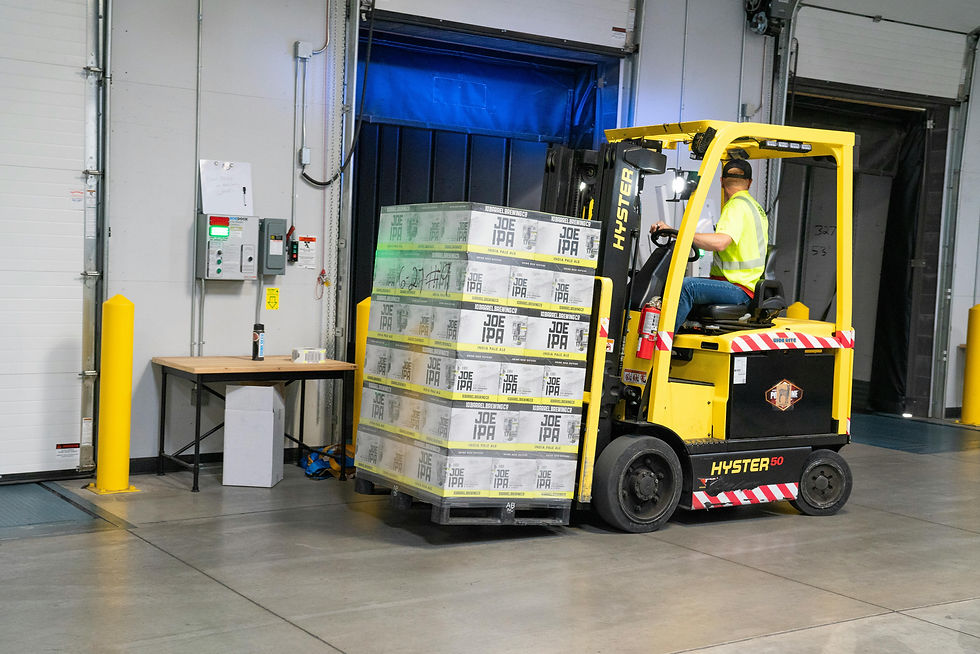
Loading and unloading is one of the most hazardous activities in the trucking industry. OSHA notes that many fatalities occur when workers are crushed by forklifts that have overturned or fallen from loading docks during truck operations. At customer sites, the conditions may be unfamiliar: uneven surfaces, inadequate lighting, no dock facilities, and pedestrians or customers in the area who aren't expecting heavy equipment to be operating.
Tail lift operations add another layer of risk. Workers using tail lifts to unload palletised goods face hazards from shifting loads, wet surfaces, overloading, and falls from the platform. These operations often happen at the roadside, in car parks, or in tight yards where the conditions are far less controlled than a purpose-built warehouse dock.
Manual handling on every delivery
Unlike long-haul trucking, delivery drivers exit and re-enter their vehicles dozens of times per shift. Each stop involves lifting, carrying, pushing, or pulling freight. The BLS reports that most nonfatal injuries to delivery truck drivers are not transportation incidents but overexertion, falls, slips, and trips that happen during the physical work of delivering goods.
Sixty-one percent of slip-and-fall injuries to delivery drivers occur on floors, walkways, and ground surfaces at delivery sites, not in the vehicle. This means the risk profile of each stop is shaped by conditions the driver encounters on arrival, conditions that vary enormously from one customer to the next.
Time pressure and the delivery schedule
Delivery drivers work under constant time pressure. The schedule dictates the route, the stops, and the windows for each delivery. When schedules are tight, safety procedures are the first thing to get compressed: faster driving, rushed unloading, skipped inspections, and shortcuts during manual handling. Research consistently shows that driver error is ten times more likely to cause a collision than other factors, and time pressure is a primary driver of those errors.
Working alone in uncontrolled environments
A delivery driver works without direct supervision, at sites they may not have visited before, in conditions that change with the weather, the time of day, and the activity of the customer's own operation. There's no supervisor watching, no safety officer walking the floor, and no system capturing what actually happens during each delivery.
The visibility gap beyond the warehouse
Inside the warehouse, you have cameras, supervisors, traffic management plans, and increasingly, computer vision AI monitoring the highest-risk zones. The moment the truck leaves the dock, most of that visibility disappears.
Safety teams know what happened inside the warehouse. They know when the truck departed. They know when the delivery was confirmed. But what happened in between, how the freight was handled at each stop, whether safe procedures were followed during unloading, whether the driver was operating in conditions that created unnecessary risk, that's a blind spot.
This gap matters because a significant proportion of serious supply chain injuries happen outside the warehouse, on the truck, at the customer site, and during the physical interactions with freight that happen dozens of times a day.

How inviol extends safety visibility on-truck
inviol's on-truck operational safety solution extends the same computer vision AI approach that works inside the warehouse to the truck itself. Using cameras mounted on the delivery vehicle, inviol monitors the safety events that happen during loading, unloading, and delivery operations at customer sites.
What it monitors
The on-truck system detects safety events during the delivery process, including unsafe interactions between the driver and freight during loading and unloading, pedestrian proximity events around the vehicle during delivery operations, and operational practices that create risk, such as unsecured loads, improper tail lift use, or manual handling in hazardous conditions.
Each event is captured with a time-stamped video clip, providing the same kind of continuous visibility that inviol's warehouse solution provides inside the facility but extended to every stop along the delivery route.
Connecting warehouse and on-truck safety
For businesses that use inviol both in the warehouse and on the truck, the result is a complete picture of safety across the supply chain. You can see how product is handled from the moment it's picked and packed, through the loading dock, onto the truck, and all the way to the customer's door. Near misses, procedural gaps, and risk patterns that span the warehouse-to-customer journey become visible for the first time.
This connected visibility also reveals whether safety culture is consistent. A team that follows best practice inside the warehouse but cuts corners during deliveries has a culture gap that traditional oversight can't detect.
Extending the coaching culture on-truck
Every captured event becomes the starting point for a coaching conversation, just as it does inside the warehouse. Video clips with faces blurred for privacy are reviewed with the team: what happened at this delivery, what could have gone wrong, and what should change.
For delivery drivers who work alone and rarely get direct feedback on their work practices, this coaching is especially valuable. It replaces the assumption that everything is fine with actual evidence of what's happening during each delivery, and it gives drivers the support to improve rather than simply the instruction to follow the rules.
inviol customers typically see an average 67% reduction in risk and a 42% reduction in incidents across their operations.

Compliance across the supply chain
Under New Zealand's Health and Safety at Work Act (HSWA), a PCBU's duty of care extends to all work carried out by the business, including delivery operations. The obligation to eliminate or minimise risks doesn't stop at the warehouse door. If your workers are loading, unloading, and handling freight at customer sites, you have a duty to manage those risks.
In Australia, the model WHS laws place the same obligations on transport and delivery operations, and Safe Work Australia's data consistently shows the transport sector as the industry with the highest number of worker fatalities.
In the US, OSHA's trucking industry standards cover loading and unloading operations, powered industrial trucks used in trucking, and the safety responsibilities of both the employer and the host site. The FMCSA regulates driver hours and vehicle safety, but the physical safety of loading and unloading falls squarely under OSHA.
Getting started
If your safety programme stops at the warehouse door, you're missing a significant portion of your supply chain risk. inviol's on-truck solution extends the same coaching-first, data-driven approach to the delivery vehicle, giving your safety team visibility into what happens at every stop along the route.
Book a demo and we'll show you how on-truck safety monitoring works alongside your warehouse operations.
Frequently Asked Questions
What are the most common injuries during truck loading and unloading?
The most common injuries include sprains and strains from manual handling, crushing injuries from forklift interactions, falls from loading docks, tail lifts, and vehicle platforms, and being struck by shifting or falling cargo. Most nonfatal delivery driver injuries are not from driving but from the physical work of loading and unloading at each stop.
Why is on-truck safety hard to manage?
Delivery drivers work alone, at multiple unfamiliar sites, under time pressure, and in conditions they can't fully control. There's no supervisor present, conditions vary at every stop, and traditional safety oversight doesn't extend beyond the warehouse. This creates a visibility gap where a significant proportion of supply chain injuries occur.
How does inviol monitor safety on delivery trucks?
inviol uses cameras mounted on the delivery vehicle to monitor safety events during loading, unloading, and delivery operations. The system detects unsafe interactions with freight, pedestrian proximity events, and operational practices that create risk. Each event is captured with a time-stamped video clip for review and coaching.
Does a PCBU's duty of care extend to delivery operations?
Yes. Under New Zealand's HSWA, the duty to eliminate or minimise risks applies to all work carried out by the business, including delivery operations at customer sites. Similar obligations apply under Australian model WHS laws, and in the US, OSHA's trucking industry standards cover loading and unloading operations.
Can you use the same safety system in the warehouse and on the truck?
Yes. inviol provides both warehouse and on-truck safety monitoring, creating a connected view of risk across the entire supply chain. This allows safety teams to see how product is handled from pick and pack through to delivery, and identify whether safety culture is consistent across the warehouse and delivery operations.