Food & beverage manufacturing safety: managing risk on the production floor
Updated: Apr 14
The hazards that define this industry
Every manufacturing environment has risks. What makes food and beverage unique is the combination of factors that exist simultaneously: wet and slippery surfaces, fast-moving machinery, temperature extremes, chemical cleaning agents, forklifts operating in the same space as people on foot, and a workforce that often includes seasonal or temporary staff who may be less familiar with site-specific procedures.
Slips, trips, and falls
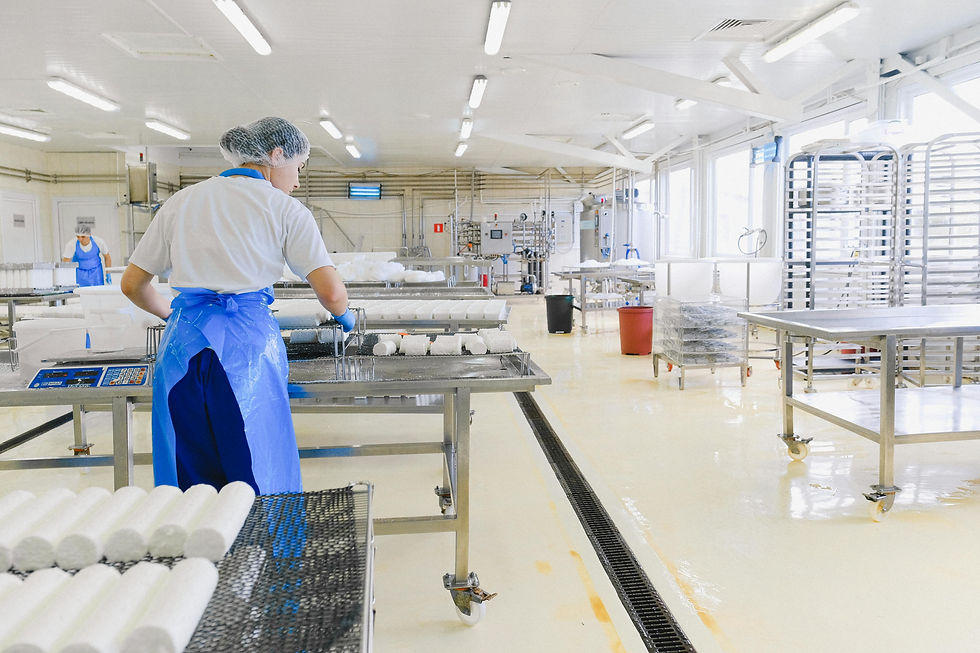
In a food production environment, floors are almost always wet. Water, oil, grease, animal fats, grain dust, and cleaning chemicals all contribute to surfaces that are inherently slippery. Add to that the hygiene requirements that demand constant cleaning, and you have floors that are re-wetted throughout every shift.
Anti-slip flooring, slip-resistant footwear, and good housekeeping practices all help, but they address the problem at the individual level. The more strategic question is whether your site layout and cleaning schedules are designed to minimise the overlap between wet surfaces and high foot traffic. That's a process design issue, not just a maintenance one.
Machinery and moving parts
Food processing equipment is built to cut, grind, mix, press, and package at speed. The most common machinery-related injuries include crushed fingers and hands, amputations, and lacerations. These often occur during cleaning, maintenance, jam-clearing, and changeovers rather than during normal production, because those are the moments when workers interact with the machine directly.
Proper lockout/tagout procedures and machine guarding are essential, but they rely on consistent compliance across every shift, every worker, and every maintenance task. That's a lot of consistency to maintain manually.
Forklift and vehicle traffic
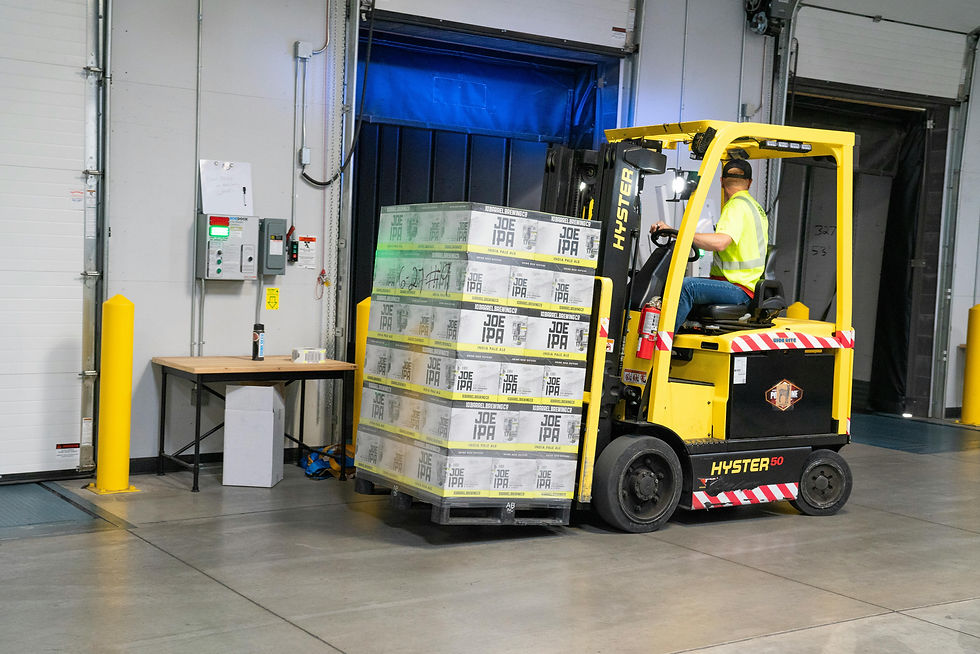
Forklifts are everywhere in food manufacturing. They move raw materials in, finished product out, and shift pallets between processing areas, cold storage, and loading docks throughout the day. In environments where the floor is wet, visibility is limited by stacked pallets or production equipment, and pedestrians are moving between workstations, the risk of a vehicle-pedestrian interaction is constant.
In Australia, vehicle incidents continue to account for the largest proportion of worker fatalities across all industries, at 42%. In food manufacturing specifically, the combination of vehicle traffic and wet surfaces makes this one of the highest-risk scenarios on site.

Chemical exposure
Cleaning and sanitation chemicals are a necessary part of food safety, but they also create occupational health risks. Alkaline detergents, chlorine-based sanitisers, and peroxides can cause splash injuries, respiratory irritation, and chemical burns. In the urgency of a production schedule, chemical handling shortcuts can become normalised, especially during rapid changeovers between product runs.
Ergonomic and repetitive strain injuries
Production line work in food manufacturing involves repetitive motions, awkward postures, heavy lifting, and extended periods of standing. WorkSafe Victoria data shows that back and shoulder injuries are among the most common in the sector, with 19% of injuries affecting the back and 14% affecting the shoulder. In the UK, nearly 5% of the food manufacturing workforce suffers from work-related ill health each year.
Why traditional safety approaches fall short
Most food manufacturers already have safety management systems in place. They run toolbox talks, conduct walk-throughs, and maintain incident logs. So why do injury rates remain stubbornly high?
The answer usually comes down to visibility. A supervisor walking the floor might see what's happening during their pass, but they can't see what happened at 3am on the night shift, or what's been gradually changing in the traffic pattern near the loading dock over the past three months. Traditional approaches capture what people remember to report, not what actually happens.
Consider near misses. The National Safety Council estimates that for every serious injury, there are hundreds of near misses. In a food production environment with high turnover and seasonal staffing, many of those near misses go unreported entirely, either because the worker didn't realise it was significant, or because the reporting process is too cumbersome to bother with during a busy shift.
The result is that safety teams often make decisions based on incomplete data. They respond to the incidents that get reported, but they can't see the patterns and leading indicators that would let them prevent the next one.
How computer vision AI changes the equation
This is where technology starts to make a practical difference. Computer vision AI uses your existing CCTV cameras to continuously monitor the production floor for safety events, without relying on anyone to notice, remember, or report them.
What it actually detects
On a food manufacturing floor, the most relevant detections include pedestrian-vehicle near misses (particularly around forklift and vehicle zones), exclusion zone breaches near machinery or high-risk areas, vehicle speed violations on wet surfaces, and patterns in how people move through the site.
The system doesn't need to monitor every camera on your site. It focuses on the highest-risk areas where the greatest potential for harm exists: loading docks, production line crossings, cold storage transitions, and forklift thoroughfares.
Seeing what you didn't know was there
One of the most valuable things computer vision AI reveals is risk you didn't know existed. Many inviol customers discover that their existing processes and physical layouts are creating more risk than they realised. A heatmap of safety events over a few weeks might show that a particular intersection near the packing area has three times the near-miss rate of anywhere else on site, or that incidents spike during the 30 minutes after a shift changeover when incoming and outgoing workers are moving through the same spaces at the same time.
That kind of insight lets you make targeted changes. Adjust a delivery schedule. Move a pedestrian walkway. Resequence a cleaning rotation so the highest-traffic areas aren't wet during peak movement. These are the kinds of process improvements that reduce risk and often improve throughput at the same time, because the same bottlenecks that create safety hazards usually also create inefficiency.
From detection to coaching
The real shift isn't just in what gets detected. It's in what happens next. Platforms like inviol are built around a coaching-first approach to safety. When a safety event is captured, the video clip (with faces blurred for privacy) becomes the starting point for a team conversation: what happened, what could have gone wrong, and what should change.
This is fundamentally different from a compliance-driven approach that uses cameras to catch people doing something wrong. Coaching turns safety events into learning moments. Over time, that builds a culture where workers engage with safety because they see it as support, not surveillance.
inviol customers typically see an average 67% reduction in risk and a 42% reduction in incidents across their sites, with results like The Warehouse Group achieving a 60% reduction in just two months.

Compliance and your obligations
If you're operating a food manufacturing facility in New Zealand, the Health and Safety at Work Act (HSWA) requires PCBUs to eliminate or minimise risks so far as is reasonably practicable. This includes a duty to proactively identify hazards and manage them, not just respond after someone gets hurt. A system that continuously monitors your highest-risk zones and documents how events are identified, coached, and resolved provides strong evidence that you're meeting that duty of care.
In Australia, Safe Work Australia's model WHS laws place similar obligations on businesses. Manufacturing is one of six industries accounting for 61% of all serious workers' compensation claims, and regulators expect to see that businesses in this sector are actively managing their risks.
In the US, OSHA requires employers to provide a workplace free from recognised hazards, and its Injury Tracking Application now collects detailed data from establishments above certain size thresholds. Demonstrating a proactive, technology-supported safety programme is increasingly important in audit and inspection contexts.
Getting started
You don't need to overhaul your safety programme overnight. A practical starting point is to identify the two or three highest-risk zones on your production floor and ask whether you have genuine visibility into what's happening there across every shift. If the honest answer is no, that's where technology can help.
Computer vision AI works with your existing CCTV infrastructure, processes data on-premise for privacy, and gives your safety team the leading indicators they need to act before someone gets hurt.
If you'd like to see how it works on a site like yours, book a demo and we'll walk you through it.
Frequently Asked Questions
What are the most common safety hazards in food and beverage manufacturing?
The most common hazards include slips, trips, and falls on wet or contaminated floors, machinery-related injuries during cleaning and maintenance, forklift-pedestrian interactions, chemical exposure from cleaning agents, and ergonomic injuries from repetitive production line work. Food manufacturing has a 60% higher injury rate than other industries.
How can AI improve safety on a food production floor?
Computer vision AI uses existing CCTV cameras to continuously monitor high-risk areas for safety events like pedestrian-vehicle near misses, exclusion zone breaches, and speed violations. It captures events across every shift without relying on manual reporting, and generates heatmaps that reveal risk patterns invisible to traditional walk-throughs.
Does AI safety monitoring work in wet or cold food manufacturing environments?
Yes. The AI analyses video from standard CCTV cameras, so it works in any environment your cameras already cover, including wet production floors, cold storage areas, and loading docks. The system focuses on the highest-risk zones rather than requiring coverage of every area.
What are PCBU obligations for food manufacturers under HSWA in New Zealand?
Under the Health and Safety at Work Act, PCBUs must eliminate or minimise workplace risks so far as is reasonably practicable. This includes proactively identifying hazards and managing them. A system that continuously monitors safety events and documents coaching and corrective actions provides evidence of meeting this duty of care.
How quickly can food manufacturers see results from AI safety monitoring?
Results vary by site, but inviol customers typically see significant risk reduction within the first few months. The Warehouse Group, for example, achieved a 60% reduction in incidents within two months of deployment. The coaching-first approach means improvements compound as teams develop safer habits over time.