Forestry and logging yard safety: what happens after the forest
Updated: Apr 10
The hazards that define the log yard
A log yard or timber processing yard is a heavy industrial environment where the materials being handled are among the heaviest and most unpredictable in any industry. Logs are irregularly shaped, can weigh several tonnes each, and behave differently depending on species, moisture content, and how they're stacked.
Heavy mobile plant in close quarters
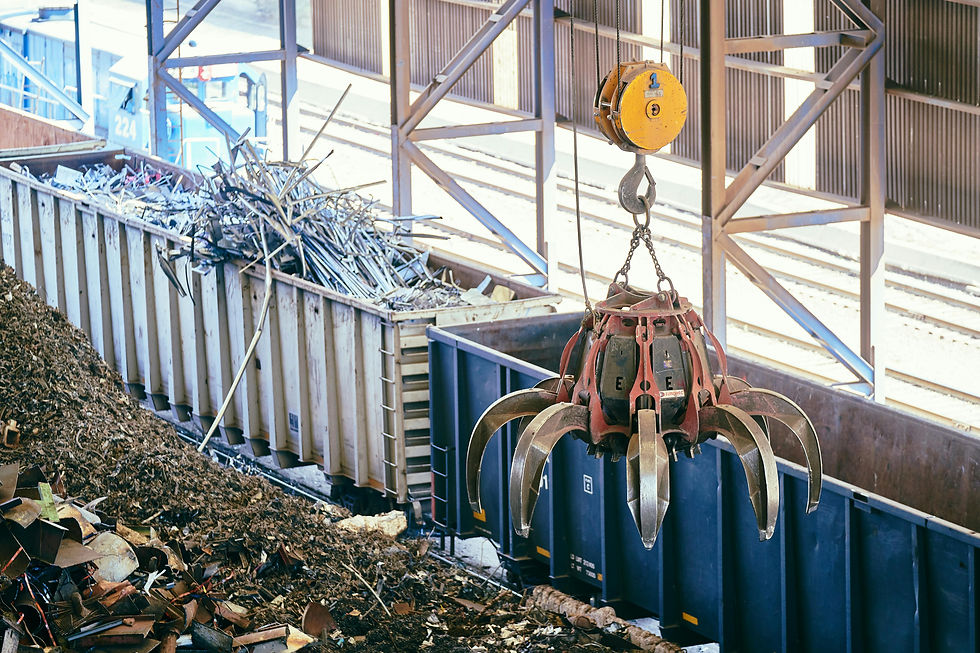
Log yards rely on heavy equipment: grapple loaders, skidders, excavators with log-handling attachments, and forklifts moving timber between storage, processing, and loading areas. This equipment is large, powerful, and has significant blind spots. BLS data shows that specialised logging and wood processing machinery were involved in 17% of fatal injuries to loggers between 2006 and 2015, including 56 fatalities from cable and grapple skidders and 16 from log loaders.
In a yard environment, these machines operate in closer proximity to workers on foot than they do in the bush. Workers may be scaling logs, directing truck movements, checking loads, or performing maintenance in areas where loaders are operating. The combination of heavy equipment, heavy materials, and pedestrians creates a vehicle-person interaction risk that mirrors the challenges of a warehouse or port, but with less controlled surfaces and fewer physical barriers.

Truck movements and the loading zone
Log trucks cycle in and out of yards continuously, and the loading and unloading process is one of the most hazardous phases of the entire forestry supply chain. WorkSafe New Zealand's guidance on landings and loading requires that all truck drivers be in a designated safe area while loading takes place, and that loading must stop if the driver leaves the safe area or cannot be contacted.
In practice, maintaining this separation consistently across every truck arrival is challenging. Drivers may need to check loads, connect drawbars, or communicate with the loader operator. Each of these moments brings a person on foot into the operating zone of heavy machinery handling multi-tonne loads. The lumber industry recognises falling objects as one of its top four hazards, and the loading zone is where that risk is most concentrated.

Unstable materials
Unlike palletised goods in a warehouse, logs can shift, roll, and behave unpredictably. Stacked log decks can settle or shift when adjacent logs are removed by a loader. Individual logs can roll if disturbed. WorkSafe NZ has investigated incidents where workers were crushed by materials that shifted during loading or processing, often because communication systems were inadequate and there was no monitoring to ensure workers were clear of the operating zone.
Variable conditions
Log yards and landings are typically outdoor environments subject to rain, mud, frost, wind, and limited lighting during early morning or late afternoon operations. These conditions affect vehicle traction, visibility, and the stability of stacked materials. Unlike a controlled warehouse environment, the operating surface in a log yard may be unsealed, uneven, and change with the weather.
Workforce experience gaps
Forestry has significant workforce challenges. The Pacific Northwest Agricultural Safety and Health Center notes high worker turnover and an increasingly diverse workforce, with many newer workers entering the industry with limited experience. Research consistently shows that inexperienced workers are disproportionately represented in injury statistics, often due to a lack of awareness of site-specific risks and hazards.
Why traditional safety struggles in these environments
Forestry and timber operations invest in safety systems, training, and compliance. SafeTree in New Zealand and organisations like the Forest Resources Association in the US provide guidance, training materials, and industry standards. WorkSafe NZ provides detailed guidance for landings and loading operations.
But the nature of these environments makes consistent compliance difficult. A safety manager might walk the yard during the day shift, but what happens during the early morning loading when a truck arrives before the rest of the team? What about the moments when a driver steps out of the safe zone during loading because they need to check a chain? These are the near misses that accumulate into patterns, and without continuous monitoring, those patterns remain invisible.
How computer vision AI addresses the gap
Computer vision AI uses existing CCTV cameras to continuously monitor the areas of the yard where the highest risk concentrates, detecting the safety events that traditional oversight misses.
What it detects in a forestry yard
The most critical detections include pedestrian-vehicle near misses involving loaders, forklifts, and trucks, exclusion zone breaches in loading zones, processing areas, or areas near operating machinery, vehicle speed violations in areas shared with pedestrians, and patterns in how people and equipment move through the yard across different shifts and operational phases.
The system focuses on your highest-risk zones: the loading area where trucks and loaders interact, the main vehicle thoroughfares, the zones around processing equipment like debarkers and saws, and the intersections where heavy plant and pedestrians are most likely to overlap.
Revealing patterns specific to your operation
The heatmap and reporting tools aggregate safety events over time, showing exactly where, when, and how often near misses are occurring. You might discover that near-miss rates spike during the first truck arrival of the day, when the loader operator starts before other staff are on site. Or that a particular route between the scaling area and the log deck brings pedestrians too close to loader operations during peak throughput. Or that vehicle speed increases in the afternoon as production pressure builds toward the end of the shift.
These insights lead to targeted, practical changes: adjusting a safe zone boundary, redesigning a pedestrian route, staggering truck arrival times, or briefing the team on a specific risk zone. Changes that reduce risk and often improve the flow of the operation at the same time.
From detection to coaching
Every captured safety event becomes the starting point for a coaching conversation. Video clips with faces blurred for privacy are shared with the team: what happened, what could have gone wrong, and what should change.
In an industry where inexperienced workers are at greatest risk, this coaching approach is especially valuable. New workers learn from real events that happened on their actual site, not generic training materials. And experienced workers, who may have normalised certain risks over years of practice, see their own environment with fresh eyes.
inviol customers typically see an average 67% reduction in risk and a 42% reduction in incidents across their sites.

Compliance and your obligations
Under New Zealand's Health and Safety at Work Act (HSWA), PCBUs must eliminate or minimise risks so far as is reasonably practicable. WorkSafe NZ has issued detailed guidance for forestry operations, including specific requirements for safe zones during loading, vehicle-pedestrian separation, and communication systems. A continuous monitoring system that documents how these requirements are being met across every shift strengthens your compliance position significantly.
In Australia, Safe Work Australia reports that agriculture, forestry and fishing has the highest fatality rate of any industry at 13.7 per 100,000 workers, more than ten times the national average. Vehicle incidents account for a significant proportion of these fatalities, and regulators expect to see that forestry operations are actively managing vehicle-pedestrian risk.
In the US, OSHA's logging standard and NIOSH's ongoing research both emphasise the need for systematic hazard identification, training, and the development of safety cultures that go beyond compliance.
Getting started
If you operate a log yard, sawmill yard, or timber processing facility, start with the loading zone and the areas where heavy plant and pedestrians share space. These are where the most serious incidents occur, and where continuous monitoring can make the biggest difference.
Computer vision AI works with your existing CCTV cameras, processes data on-premise for privacy, and gives your safety team the leading indicators they need to prevent the next incident.
Book a demo and we'll show you how it works for forestry and timber operations.
Frequently Asked Questions
What are the biggest safety risks in a log yard?
The biggest risks include vehicle-pedestrian interactions involving log loaders, grapple cranes, forklifts, and trucks, falling or shifting logs during loading and stacking, unstable log decks, variable outdoor conditions affecting traction and visibility, and workers entering operating zones during loading or processing.
Why do more accidents happen at the landing than in the bush?
On mechanised operations, the landing is where multiple activities converge: log trucks being loaded, loaders operating, workers scaling or checking loads, and equipment transitioning between tasks. This concentration of activity in a confined area creates more opportunities for vehicle-pedestrian interactions and struck-by incidents than the more dispersed operations in the bush.
How can AI improve safety in a forestry yard?
Computer vision AI uses existing CCTV cameras to continuously monitor high-risk zones like loading areas, vehicle thoroughfares, and processing zones for safety events like pedestrian-vehicle near misses, exclusion zone breaches, and speed violations. It captures events across every shift and generates heatmaps that reveal risk patterns specific to your operation.
Does AI monitoring work in outdoor forestry environments?
Yes. Computer vision AI analyses video from standard CCTV cameras, so it works in any environment your cameras can cover. For outdoor yards with variable weather and lighting, the system detects physical safety events like vehicle-pedestrian proximity and exclusion zone breaches regardless of conditions.
How does coaching help in an industry with high worker turnover?
The coaching-first approach uses video clips of real safety events captured on site, with faces blurred for privacy. New workers learn from events that happened at their actual workplace, which accelerates their understanding of site-specific risks much faster than generic training. This is especially valuable in forestry, where inexperienced workers are disproportionately represented in injury statistics.