Cold storage safety transformation: from reactive to proactive in 90 days
Updated: Apr 14
Cold storage facilities are some of the most challenging environments in the warehouse world. Everything that makes a standard warehouse risky (forklifts, pedestrian traffic, tight aisles, high throughput) is amplified by freezing temperatures, reduced visibility, icy surfaces, and workers whose mobility and reaction times are compromised by bulky PPE.
And yet, most cold storage operations manage safety the same way as any ambient warehouse: periodic audits, manual incident reporting, and reactive investigation after something goes wrong. That approach has always had limitations. In cold storage, those limitations are more dangerous.
If you're running a cold storage operation and considering computer vision AI, here's what a typical deployment looks like and what changes in the first 90 days.
The typical starting point
Most cold storage facilities we work with share a similar profile. They're multi-temperature distribution centres running 24/7 across multiple shifts, handling chilled and frozen goods, with a fleet of forklifts operating across ambient, chilled (2–4°C), and freezer (−20°C and below) zones.
Their safety records aren't usually terrible by industry standards. There are a handful of recordable incidents per year, most involving minor forklift-pedestrian near misses and slips on icy surfaces near the transition zones between temperature areas. Workers' compensation claims are manageable but trending upward. The safety team is experienced and committed, but stretched thin across the 24/7 operation.
The core problem is almost always visibility. A safety manager can walk the floor during the day shift and see what's happening. But they can't see the night shift or the weekend shifts. They can't see what happens at the freezer zone transition point at 3am when condensation turns the floor into an ice rink. They rely on voluntary near-miss reporting, and like most operations, the reporting rate is a fraction of what's actually occurring.
The decision to deploy computer vision AI is rarely prompted by a catastrophic incident. It's usually prompted by a simple question: "What are we not seeing?"
What deployment looks like: the first two weeks
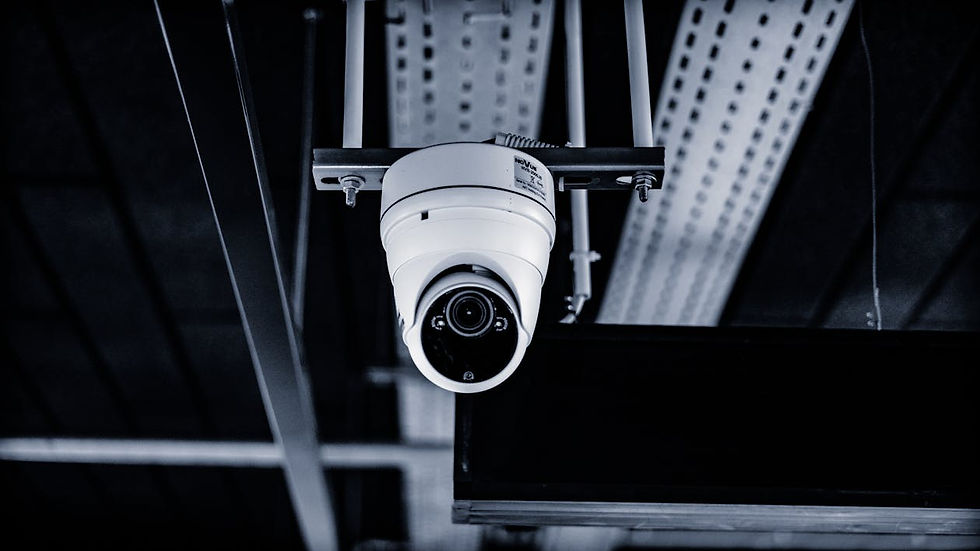
inviol connects to a selection of existing CCTV cameras focused on the highest-risk areas: typically the freezer transition zones, main forklift traffic lanes, loading dock approaches, and narrow aisles in the frozen goods section. A facility with over 50 cameras might only need 14 connected to cover the areas where risk concentrates most.
The on-premise processing unit sits on-site, meaning video footage never leaves the building. Faces are blurred automatically. The system begins detecting events from day one, classifying them by type and severity.
Within the first two weeks, it's common for the system to capture over 200 safety events that the team had no prior visibility of.
What the data typically reveals
The initial data is almost always confronting. Not because it reveals a crisis, but because it reveals patterns that nobody had been able to see before.
A common finding: the highest concentration of pedestrian-forklift near misses isn't where the safety team expects. Many teams assume the main loading dock is the riskiest area, because that's where the most visible traffic is. The heatmap data often tells a different story. In cold storage environments, the transition zone between the chilled section and the freezer section frequently shows the highest near-miss density.
The reason is straightforward once you can see the data. At those transition points, condensation from the temperature differential creates a thin layer of moisture on the floor. Forklifts slow down slightly as they cross it, but pedestrians don't. Sightlines are often poor because of racking configurations that create blind corners. And traffic peaks during shift changeover, when incoming and outgoing crews cross paths in the same narrow corridor.
None of this is visible from a single safety walk. It requires continuous monitoring across every shift to see the pattern.
The data also commonly reveals that forklift speeding events are higher on the night shift than the day shift. Not dramatically, but consistently. The likely explanation is lower supervisory presence overnight combined with a smaller crew trying to maintain the same throughput targets.

The first interventions
Armed with actual data rather than assumptions, safety teams typically make changes like these in the first month.
Redesigning traffic flow at the freezer transition zone. A convex mirror at the blind corner, extended floor markings, and a diverted pedestrian route that avoids the forklift lane entirely. The cost is minimal. The impact is often immediate: near misses at the transition zone can drop significantly within two weeks.
Adjusting the night shift supervisor schedule. Rather than having the supervisor finish partway through the shift, staggering coverage so a supervisor is present for the full duration. Speeding data on the night shift typically improves within days.
Offsetting the shift changeover time. Instead of having all incoming and outgoing workers transition simultaneously, staggering the changeover by 15 minutes for the freezer zone team. This reduces the peak pedestrian-forklift conflict at the transition point during the busiest window.
How coaching changes the conversation
The interventions above are process and layout changes, important, but not the whole story. The bigger shift is cultural.
When safety teams start using inviol's coaching platform to review detected events with their teams, the dynamic changes. Every week, a shift supervisor selects two or three events from the dashboard, gathers the team, and plays the footage (with faces blurred). The conversation isn't "who did this wrong?" It's "what happened here, and what can we do differently?"
This is new for most workforces. In the past, safety conversations were either reactive (something went wrong, now we're investigating) or generic (here's a reminder about the rules). The coaching sessions are specific, visual, and focused on learning rather than blame.
The effect on near-miss reporting is consistently positive. Within six weeks, voluntary near-miss reports from workers commonly increase significantly. When people see that reported events lead to constructive conversations and actual changes (not disciplinary action), they start trusting the system. Workers begin flagging hazards the AI hasn't detected, like a damaged pallet rack upright that's difficult to see in the freezer fog, or a drain cover that lifts slightly when forklifts drive over it.
The data and the culture start reinforcing each other.

What 90 days typically looks like
After three months, cold storage facilities using inviol typically see measurable improvements across the metrics that matter.
Total safety events detected by the AI drop consistently week on week, indicating that interventions and coaching are reducing the frequency of unsafe interactions. Pedestrian-forklift near-miss rates in the highest-risk zones fall substantially. Night shift speeding events move closer to day-shift levels. Voluntary near-miss reporting from workers increases.
But the results that operations directors tend to value most aren't just about safety. Traffic flow redesigns at transition zones also improve throughput, because forklifts are no longer slowing to navigate congested, icy corridors. Shift changeover staggers reduce bottlenecks during the busiest periods. Heatmap data often reveals that certain freezer aisles generate more near misses than others because they're narrower, leading to racking reconfigurations that improve both safety and picking efficiency.
This is the pattern we see repeatedly with cold storage deployments: the same data that makes the facility safer also makes it more efficient. When you can see where risk concentrates, you can see where flow breaks down. Fixing one often fixes both. inviol customers across all facility types see an average 67% risk reduction.
Why cold storage is different
Cold storage doesn't just amplify standard warehouse risks, it introduces unique ones.
OSHA and NIOSH identify cold stress as a significant hazard in freezer environments. Lower temperatures reduce workers' dexterity and reaction times. Bulky thermal PPE limits peripheral vision and mobility. Icy surfaces are an ever-present slip hazard, particularly in transition zones. Condensation and fog reduce visibility for both forklift operators and pedestrians. Workers rotate between temperature zones, meaning their PPE and alertness levels change throughout a shift.
Injuries in warehousing operations nearly doubled between 2016 and 2021 in the US, and cold storage environments carry additional risk factors that make proactive monitoring more important, not less.
Traditional safety methods (periodic walks, manual reporting, scheduled audits) were designed for environments where a safety officer can see the risks. In a freezer warehouse at 2am, with fog, ice, reduced lighting, and workers in full thermal gear, those methods have serious blind spots. Computer vision AI fills those blind spots by monitoring continuously, consistently, and across every shift.
What a 90-day transformation looks like
If your cold storage operation is still managing safety reactively, the shift to proactive doesn't require a multi-year programme. The technology deploys in days. The first data appears within hours. And within 90 days, you'll have a fundamentally different picture of where risk sits, what's driving it, and whether your interventions are working.
The facilities that get the best results are the ones that combine the technology with a genuine commitment to coaching over policing. The AI provides the visibility. The coaching provides the behaviour change. Together, they create the feedback loop that turns a reactive safety programme into a proactive one.
Running a cold storage operation and want to see what your data looks like? Book a demo and we'll show you how inviol works in multi-temperature environments, including the transition zones, freezer aisles, and loading docks where cold storage risk concentrates.
Frequently Asked Questions
What makes cold storage safety different from standard warehouse safety?
Cold storage introduces additional hazards including icy surfaces (especially in transition zones between temperature areas), reduced visibility from condensation and fog, workers with limited dexterity and mobility due to thermal PPE, and cold stress that affects reaction times. These factors amplify standard forklift-pedestrian risks and make traditional safety monitoring methods less effective.
How quickly can AI safety monitoring be deployed in a cold storage facility?
Computer vision AI platforms like inviol connect to existing CCTV cameras and typically deploy within days, not months. The system begins detecting safety events immediately, and within two weeks most facilities have a comprehensive picture of where risk concentrates across their operation.
Does AI safety monitoring work in freezer environments?
Yes. The AI connects to your existing CCTV cameras, which are already designed to operate in your facility's temperature conditions. The on-premise processing unit is installed in a standard server environment, not in the freezer itself. The system monitors all connected camera feeds regardless of the temperature zone they cover.
What kind of safety improvements can cold storage facilities expect in 90 days?
Results vary by facility, but common outcomes include significant reductions in pedestrian-forklift near misses (particularly in transition zones), reduced speeding events, increased voluntary near-miss reporting from workers, and process improvements that benefit both safety and operational efficiency. inviol customers across all facility types see an average 67% risk reduction.
Can the same data that improves safety also improve cold storage operations?
Yes. Heatmap data that shows where near misses concentrate often also reveals where traffic flow can be redesigned for better throughput. Common operational improvements include optimised shift changeover timing, redesigned forklift routes, and racking reconfigurations that reduce both risk and picking time.