Cold storage safety: unique hazards and how AI helps
Updated: Apr 14
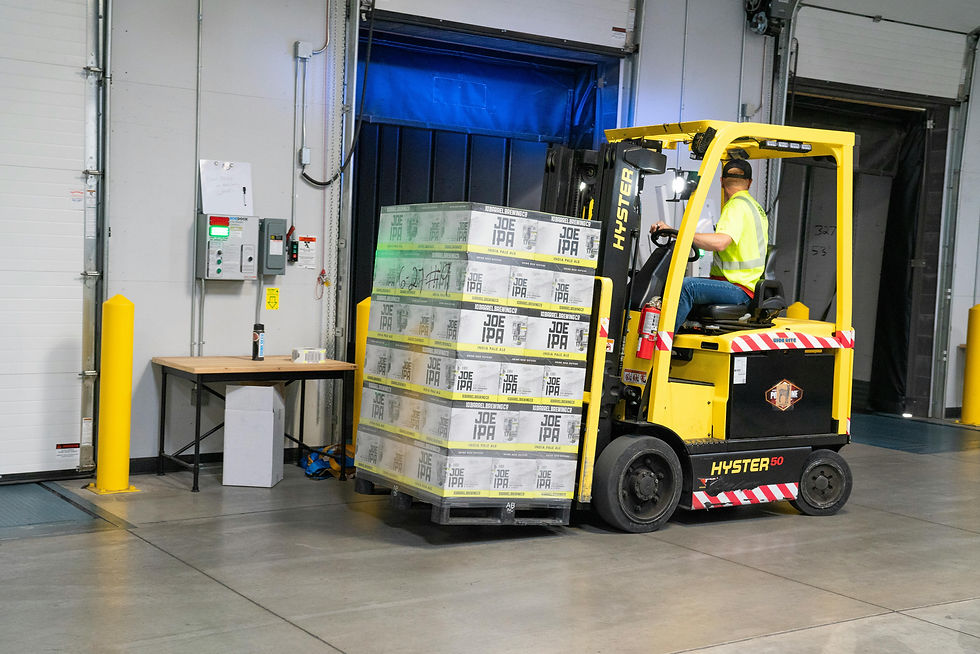
Cold storage facilities are some of the most demanding workplaces in the supply chain. They combine every risk you'd find in a standard warehouse (forklifts, loading docks, manual handling, racking) with a set of environmental hazards that make everything harder and more dangerous. Freezing temperatures. Icy floors. Reduced dexterity. Limited visibility from fog and condensation. Bulky PPE that restricts movement and makes communication harder.
For the workers who keep our frozen food, pharmaceuticals, and perishable goods moving, these conditions aren't an occasional inconvenience. They're the reality of every shift. And for safety leaders managing cold storage operations, the challenge is finding ways to maintain visibility and control in environments that actively resist both.
The hazards that make cold storage different
Every warehouse hazard is amplified in a cold storage environment. But there are several risks that are either unique to cold storage or significantly more severe in freezing conditions.
Cold stress and reduced physical performance
Working in temperatures between -10°F and -40°F (-23°C to -40°C) puts enormous strain on the human body. OSHA and NIOSH identify cold stress as a leading cause of workplace injury in freezer warehouses, particularly during seasonal peak periods.
The effects are both immediate and cumulative. Short-term exposure reduces dexterity, grip strength, and reaction time. Workers wearing thick insulated gloves struggle with fine motor tasks. Decision-making slows as the body diverts energy to maintaining core temperature. Over longer periods, the risks escalate to frostbite (particularly to hands, ears, and face) and hypothermia, which impairs movement and judgement dangerously.
These effects compound other risks. A worker with reduced grip is more likely to drop a load. A worker with slower reaction time is less able to respond to a moving forklift. Cold stress doesn't just create its own hazards. It makes every other hazard in the facility more likely to result in harm.

Ice, condensation, and slip hazards
Cold storage facilities are in a constant battle with condensation. Every time a door opens between a cold zone and an ambient area, warm air meets cold surfaces and creates moisture. That moisture freezes, creating ice on floors, loading docks, and equipment.
OSHA standard 1910.22(a)(3) requires that walking surfaces be maintained free of hazards including snow and ice, but in practice, ice accumulation in cold storage is an ongoing challenge that requires constant attention rather than a one-off fix. Transition zones (the areas between cold rooms and ambient spaces) are particularly dangerous because conditions change within a few metres. A worker walking confidently on a dry floor can step onto a patch of black ice without warning.
The combination of icy floors and the heavier, bulkier footwear required for cold environments creates a significant slip and fall risk that's much harder to manage than in a standard warehouse.

Reduced visibility
Fog and condensation are persistent problems in cold storage, particularly near doors, transition zones, and loading docks. When warm, moist air enters a cold space, it creates fog that can significantly reduce visibility for both pedestrians and forklift operators.
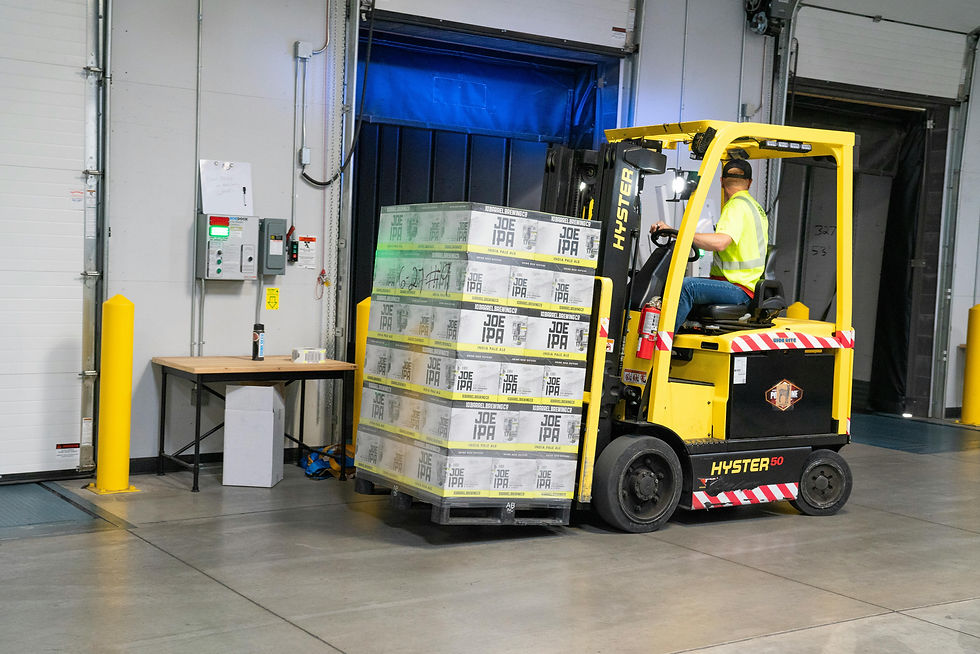
This is especially dangerous at intersections and in aisles where forklifts and pedestrians share space. A forklift operator wearing cold-weather PPE (which often limits peripheral vision) navigating through fog in a narrow aisle is operating with substantially less situational awareness than the same operator in an ambient warehouse. The margin for error shrinks, while the consequences of a collision remain just as severe.
Equipment stress and malfunction
Cold temperatures are hard on equipment. Steel can become brittle at low temperatures, increasing the risk of structural failures in racking systems. Condensation freeze-thaw cycles corrode anchor points and weaken connections over time. Forklift batteries drain faster in cold conditions, and hydraulic systems can become sluggish.
Equipment failures contribute to 15% of all warehouse injuries, and in cold storage, the rate is likely higher due to the additional stress that extreme temperatures place on machinery and infrastructure. Regular inspection and maintenance schedules are critical, but the hostile environment makes inspections themselves more difficult and less pleasant (which means they're more likely to be rushed or skipped).
Tighter layouts and reduced clearance
Cold storage space is expensive to build and expensive to run. According to the US Department of Energy, commercial refrigeration uses roughly 1.3 quads of source energy each year in the US alone. That cost pressure means cold storage facilities are typically designed to maximise storage density, with narrower aisles, tighter turning circles, and less clearance between racking, vehicles, and pedestrians than you'd find in an ambient warehouse.
The safety implications are significant. Forklift operators have less room to manoeuvre, especially when wearing bulky cold-weather PPE that restricts peripheral vision. Pedestrians have fewer places to step aside when a vehicle approaches. And the margin of error in every vehicle-pedestrian interaction is smaller. What might be a comfortable passing distance in a standard warehouse becomes a near miss in a cold store, simply because the space doesn't allow for the same buffers.
Entrapment
A hazard almost unique to cold storage: the risk of workers being accidentally locked inside a freezer room. Most cold storage safety protocols require inside-release mechanisms on freezer doors, battery-backed alarm systems, and clear communication procedures before entering cold rooms. But incidents still occur, and in a sub-zero environment, the consequences of even a short entrapment can be severe.
Why cold storage needs AI more than most environments
Here's the core challenge for safety managers in cold storage: the environment that creates the most hazards is also the environment where human observation is least effective.
Walking a cold storage floor for a safety inspection means donning full cold-weather PPE, entering a freezing environment with reduced visibility, and conducting observations while your own dexterity and cognitive performance are declining with every minute of exposure. The practical result is that safety walks in cold storage are shorter, less frequent, and less thorough than in ambient warehouses. The very environment that demands the most oversight is the one that makes oversight hardest.
This is precisely where computer vision AI adds the most value. CCTV cameras don't feel the cold. They don't fog up (assuming they're properly specified for the environment). They don't lose dexterity or cognitive performance. They monitor continuously, including during the night shifts and peak periods when cold stress risk is highest and supervision is typically lightest.
For a cold storage operation, inviol connects to a selection of existing cameras focused on the highest-risk areas: forklift traffic lanes, pedestrian intersections, transition zones, and loading docks. The system detects safety events (near misses between people and vehicles, exclusion zone breaches, speed violations) with the same consistency in a -30°C freezer as in a 20°C office. Events are captured, classified, and fed into coaching workflows where supervisors review them with their teams.
What AI reveals in cold storage that you can't see on a walk
Cold storage operators who deploy inviol frequently discover patterns that were invisible through traditional observation.
Transition zone risk concentration. The heatmap often shows a dense cluster of near misses around door openings between cold and ambient zones. This makes sense (it's where visibility drops, floors get icy, and traffic converges), but seeing the pattern quantified often prompts targeted interventions like improved lighting, anti-slip treatments, or traffic flow redesigns in those specific areas.
Time-of-day patterns. Cold storage operations often run 24/7, and the data frequently reveals that risk is not evenly distributed across shifts. Peak delivery windows, shift changeovers, and late-night periods when supervision is lighter often show distinctly different risk profiles. This data allows safety leaders to allocate coaching and supervisory resources where they're needed most.
Process-driven risk. Sometimes the data reveals that a particular workflow (such as how pallets are staged for loading, or the route forklifts take to reach a specific storage zone) is creating unnecessary pedestrian-vehicle interactions. Adjusting the process based on data often reduces risk and improves efficiency at the same time. Customers regularly find that addressing these insights leads to less damage to goods and machinery alongside the safety improvements.
Regulatory context across markets
Cold storage safety falls under general warehouse and workplace safety regulations in most jurisdictions, with specific attention to cold stress hazards.
In the United States, OSHA's warehousing guidance covers cold storage hazards including cold stress, slippery surfaces, forklift safety, and ammonia refrigeration system requirements. OSHA classifies cold stress risks under 29 CFR 1910.132 and 1910.138, requiring employers to provide protective clothing and PPE.
In New Zealand, cold storage operations fall under the Health and Safety at Work Act (HSWA), which requires PCBUs to identify and manage all workplace risks, including those specific to cold environments. WorkSafe NZ has specifically highlighted forklift risks across all warehouse types, including cold storage.
In Australia, Safe Work Australia's model WHS laws apply equally to cold storage facilities. With vehicle incidents accounting for 42% of all worker fatalities nationally, cold storage operators (where reduced visibility and icy conditions make vehicle-pedestrian interactions even more dangerous) have a particular obligation to manage this risk proactively.
Keeping people safe in the coldest workplaces
Cold storage workers do difficult, physically demanding work in conditions most people would find intolerable. They deserve safety systems that match the severity of the environment they work in.
Traditional safety approaches (training, PPE, signage, manual inspections) are necessary but not sufficient in cold storage. The environment itself limits how effectively those approaches can be applied. Computer vision AI fills the gap by providing continuous, objective, environment-proof monitoring that works as well at -30°C as it does at room temperature.
Managing a cold storage operation and want to see what AI can do? Book a demo and we'll show you how inviol works in cold storage environments, using your existing cameras to detect risk and drive coaching in the most demanding conditions.
Frequently Asked Questions
What are the unique safety hazards in cold storage warehouses?
Cold storage combines all standard warehouse hazards (forklifts, loading docks, manual handling) with environmental risks unique to freezing conditions: cold stress that reduces dexterity and reaction time, icy floors from condensation, reduced visibility from fog, equipment stress and malfunction from extreme temperatures, and the risk of worker entrapment in freezer rooms.
How does computer vision AI work in cold storage environments?
CCTV cameras (when properly specified for cold environments) are unaffected by the conditions that limit human observation. Computer vision AI connects to existing cameras in the facility and detects safety events such as pedestrian-vehicle near misses, exclusion zone breaches, and speed violations with the same consistency in a -30°C freezer as in an ambient warehouse. Events are captured and fed into coaching workflows.
Why is cold storage harder to monitor than a standard warehouse?
The freezing environment limits human observation. Safety walks are shorter and less frequent because the cold affects the observer's dexterity, concentration, and comfort. Fog reduces visibility. Bulky cold-weather PPE restricts movement and peripheral vision. The result is that the environment with the most hazards gets the least human oversight, which is exactly the gap computer vision AI fills.
What patterns does AI typically reveal in cold storage facilities?
Common findings include concentrations of near misses around transition zones (where cold and ambient areas meet), time-of-day risk patterns linked to delivery windows or shift changeovers, and process-driven risks where workflows create unnecessary pedestrian-vehicle interactions. These insights often lead to targeted interventions that improve both safety and operational efficiency.
What regulations apply to cold storage safety?
In the US, OSHA's warehousing guidance and cold stress standards (29 CFR 1910.132, 1910.138) apply. In New Zealand, the HSWA requires PCBUs to manage all workplace risks including cold-environment hazards. In Australia, Safe Work Australia's model WHS laws apply equally to cold storage facilities. All three frameworks require proactive risk identification and management.